A Collectors Guide to Identifying and Pricing Vintage Toys Using AI Photo Tools
The 'Is This Worth Anything' Dilemma
You’re staring at a box in your attic, or perhaps a dusty shelf at a local estate sale. Inside is a plastic figure with half its paint rubbed off, a die-cast car with a slightly bent axle, or a board game from a decade you barely remember.
Your gut tells you there’s value there. But your brain remembers the time you spent three hours scrolling through eBay sold listings, only to realize you were looking at the 'Version B' variant while you actually own the common 'Version A.'
Identifying vintage toys is notoriously difficult because the devil is in the details. A 1977 Star Wars figure might be worth $20 or $2,000 depending on a small COO (Country of Origin) stamp on the back of the leg. This is where the old way of researching—manual keyword searching—often fails us.
Why Traditional Searching Fails Vintage Collectors
Traditional search engines rely on you knowing what the item is called. But what if the brand name has worn off? What if the character is obscure?
Manual searching has three major pitfalls: 1. Terminology Gaps: You might call it a "blue robot," but collectors call it a "1982 Takara Diaclone." If you don't have the right words, you won't find the right price. 2. Condition Blindness: Search results often show 'Mint in Box' prices, which can give you a false sense of security if your item is 'Loose/Played With.' 3. The Variant Trap: Subtle differences in plastic color or mold marks can change the value by 500%.
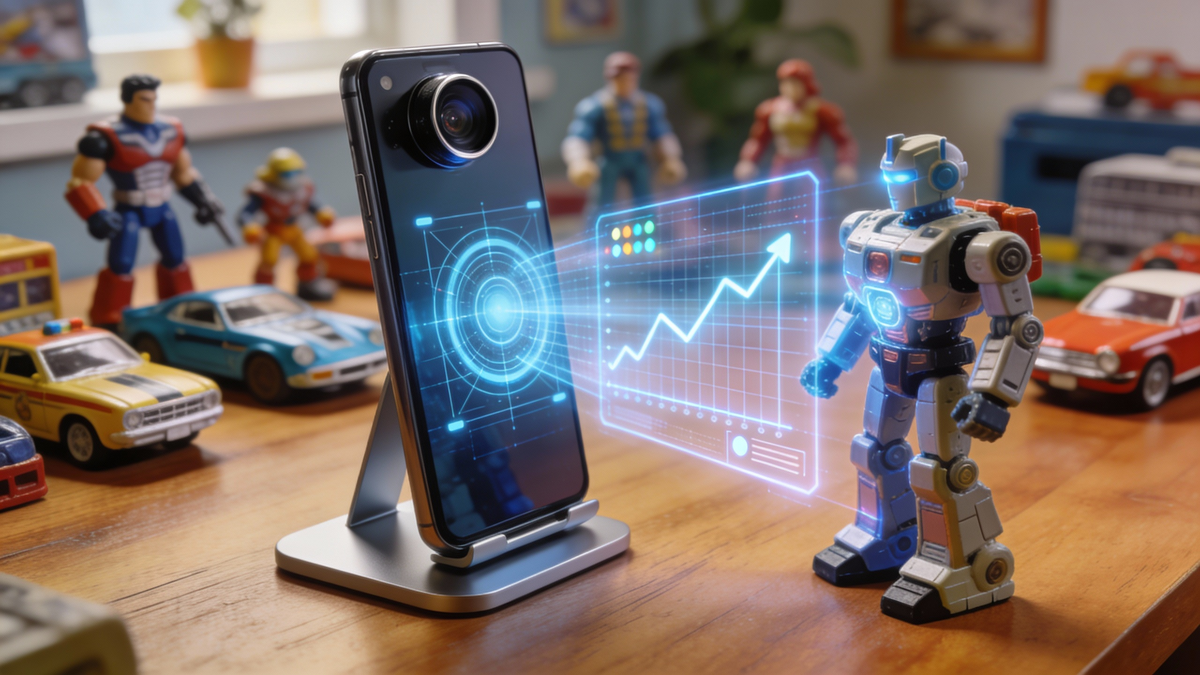
AI photo identification is changing this by looking at the object the way a human expert does—analyzing shape, color, and markings to find a match in seconds.
How to Use AI Photo ID for Maximum Accuracy
Not all photos are created equal. If you want an AI tool to give you an accurate valuation, you have to give it high-quality data. Here is the workflow used by professional resellers and serious hobbyists.
1. The 'Neutral Ground' Setup
AI works by identifying patterns. If you take a photo of a toy on a cluttered kitchen table, the AI might get distracted by your cereal box or the grain of the wood. * Actionable Tip: Use a solid, neutral background. A plain white sheet or a gray piece of poster board is perfect. This forces the AI to focus 100% of its 'attention' on the toy's silhouette and details.
2. Lighting is Data
Shadows can hide the very marks that identify a toy's age. Avoid using a harsh flash, which creates 'hot spots' (bright white glares) on plastic. Instead, take your photos near a window with natural, indirect light.
3. Capture the 'Tell'
Every toy line has a 'tell'—a specific area that proves its authenticity. * For Action Figures: Look for the copyright stamp (usually on the inner thigh or the back of the neck). * For Die-Cast Cars: The underside (chassis) usually contains the most data. * For Dolls: Check the back of the head or the small of the back.
If you're using an identification tool, try to get these markings in the frame. Tools like Valuify allow you to snap a quick photo and instantly cross-reference it against massive databases of market history, which is much faster than typing out 'small plastic man with red helmet 1984.'
Understanding the 'Value' in Valuations
Once the AI identifies your item, it will likely give you a price range. It is vital to understand that 'Value' is not a fixed number; it’s a spectrum.
The Three Prices
- The 'Asking' Price: What people hope to get on eBay. This is usually irrelevant.
- The 'Sold' Price: What someone actually paid in the last 90 days. This is your true benchmark.
- The 'Insurance' Value: What it would cost to replace the item immediately. This is usually higher than the sold price.
When you use an AI pricing assistant, look for the 'Sold' or 'Market' data. If an app tells you a toy is worth $50, check if that’s an average of recent sales or just a single outlier. Markets for vintage toys are volatile; a character might spike in value because of a new movie trailer and drop three months later.
The Nuance of Condition
AI is incredible at identification, but it’s still learning how to 'grade' condition perfectly. As a collector, you need to apply a 'Condition Tax' to the AI's estimate:
- C-9 (Mint): No paint chips, tight joints, looks new. (100% of market value)
- C-5 (Good/Fair): Visible wear, loose limbs, maybe a small accessory missing. (40-50% of market value)
- Beater: Heavily chewed, broken parts, missing major pieces. (10-20% of market value, or only valuable for 'parts').
Putting It Into Practice: A Step-by-Step Workflow
If you have a collection of 50+ items to go through, don't do them one by one with a manual search. It will take you all weekend. Try this instead:
- Sort by Material: Group plastics, metals, and plushes together. This helps you stay in the right mindset for checking specific markings.
- The Quick Scan: Use an AI identifier to get a 'First Pass' valuation. If the tool identifies a figure as being worth $2, put it in the 'Common' pile. If it flags something as $50+, put it in the 'Research' pile.
- Deep Dive the Winners: For your 'Research' pile, take multiple photos of the specific markings. Use a dedicated tool like Valuify to see real-time market data to ensure you aren't missing a rare variant.
- Document: Keep a simple spreadsheet or use the 'History' feature in your identification app to track the total value of your collection for insurance purposes.
Final Thoughts
Collecting should be about the joy of the hunt and the nostalgia of the find, not the frustration of endless research. AI doesn't replace the expertise of a seasoned collector, but it does provide a massive head start. It turns a three-minute search into a three-second snap, letting you focus on what actually matters: building a collection you love.
Whether you’re cleaning out a garage or hunting at a flea market, having a pricing assistant in your pocket changes the game. It gives you the confidence to pass on the junk and pull the trigger on the hidden gems.
Ready to identify your collection?
If you want to speed up your identification process, you can download Valuify to start identifying items and checking market prices instantly.
Download on the App Store or Google Play.