How to Measure Food Portions Accurately Without a Kitchen Scale (Using What You Already Have)
How to Measure Food Portions Accurately Without a Kitchen Scale (Using What You Already Have)
You're trying to track your nutrition, follow a recipe, or manage portion sizes, but you don't have a kitchen scale. Maybe you're traveling, your scale broke, or you simply never got around to buying one. Whatever the reason, you're stuck eyeballing portions and wondering if that "handful of nuts" is actually 30 grams or closer to 60.
This frustration is more common than you might think. Studies show that people consistently underestimate portion sizes by 20-40% when eyeballing food, which can completely derail nutrition goals or recipe outcomes. But here's the good news: you don't need to rush out and buy expensive equipment to get accurate measurements.
Why Accurate Portion Measurement Actually Matters
Before diving into solutions, let's acknowledge why this matters beyond just following recipes. Portion accuracy affects:
- Calorie tracking: A "small" avocado can range from 150-300 calories depending on size
- Medication timing: If you're managing blood sugar, carb portions matter significantly
- Food costs: Overportioning expensive ingredients like nuts or cheese adds up quickly
- Cooking consistency: That amazing dish you made last week? You'll want to recreate it exactly
The challenge is that our perception of "normal" portions has shifted dramatically. What restaurants serve as a "single serving" is often 2-3 actual servings, skewing our internal portion meter.
Method 1: The Hand-Based Measurement System
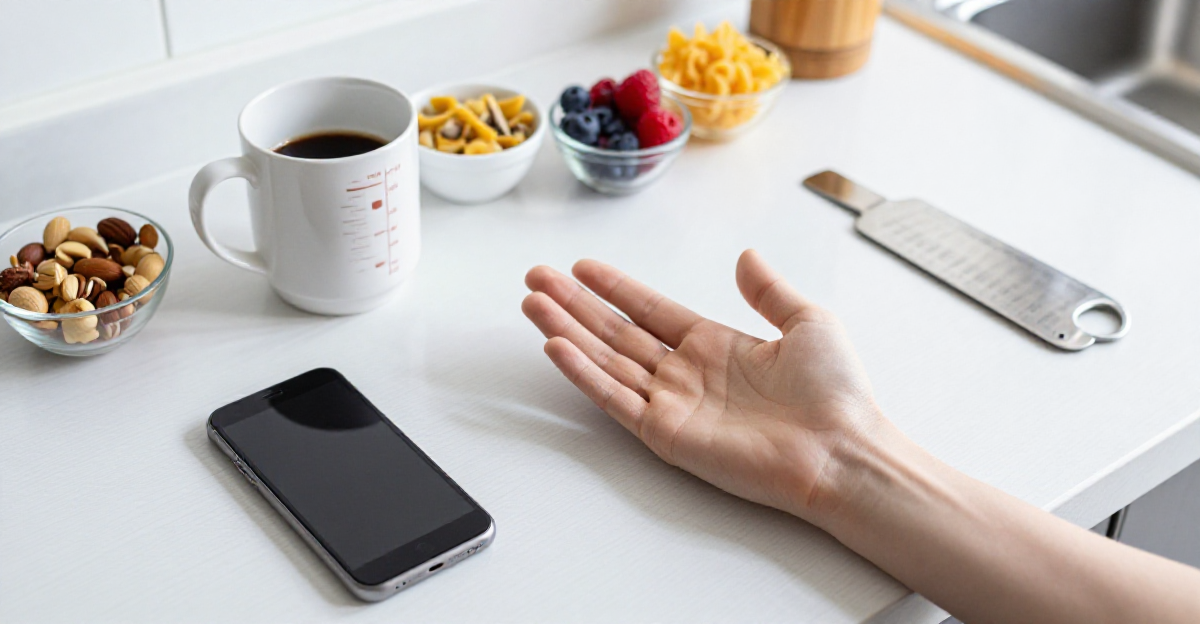
Your hands are proportional to your body size, making them surprisingly accurate measuring tools. Here's how to use them:
Protein Portions
- Palm size (thickness too) = 3-4 oz of meat, fish, or poultry
- Thumb tip to first joint = 1 oz of cheese
- Whole thumb = 1 tablespoon of nut butter
Carbohydrates
- Cupped hand = 1/2 cup of rice, pasta, or grains
- Closed fist = 1 cup of vegetables or fruit
Fats
- Thumb tip = 1 teaspoon of oil or butter
- Small handful (fingertips to palm) = 1 oz of nuts or seeds
The beauty of this system is that it scales with your body size naturally. Someone with larger hands generally needs more calories than someone with smaller hands.
Method 2: Household Item Comparisons
Most kitchens are filled with consistent measuring tools disguised as everyday items:
Common Kitchen Items as Scales
- Coffee mug = typically 8 oz (1 cup) when filled to the brim
- Ice cream scoop = usually 1/4 cup (4 tablespoons)
- Soup ladle = generally 1/2 cup
- Wine glass = 5 oz when filled to the widest part
Visual Comparisons That Actually Work
- Deck of cards = 3 oz of meat
- Tennis ball = 1/2 cup of fruit or vegetables
- Golf ball = 2 tablespoons of nut butter or salad dressing
- Dice = 1 teaspoon of oil
Pro tip: Test these comparisons with actual measuring tools once when you're home, so you know if your coffee mug is actually 8 oz or closer to 12 oz.
Method 3: Using Your Smartphone as a Digital Scale
Here's something many people don't know: modern smartphones can actually function as surprisingly accurate scales for small items. The technology uses your phone's pressure-sensitive screen to detect weight.
This works particularly well for: - Spices and seasonings - Small portions of expensive ingredients (saffron, vanilla beans) - Jewelry or small items you're selling online - Medication portions - Coffee beans for precise brewing
The accuracy isn't perfect for large items, but for portions under 100 grams, it can be remarkably precise. Apps like Scalefy can turn your iPhone into a functional gram scale, which is especially helpful when you need to measure small, calorie-dense foods like nuts, chocolate, or oils where a few grams can make a significant difference.
Method 4: The Water Displacement Trick
For irregularly shaped foods, use the same principle Archimedes discovered:
- Fill a measuring cup with water and note the level
- Add your food item
- The difference in water level equals the volume of your food
This works great for: - Fresh fruits and vegetables - Chunks of cheese - Baked goods
Note: This gives you volume, not weight. You'll need to know the density of your food to convert to weight, but for many fruits and vegetables, 1 cup of volume roughly equals 150-200 grams.
Portion Control Strategies That Don't Require Measuring
Sometimes the goal isn't precise measurement but consistent portioning. Here are some practical approaches:
The Plate Method
- Half your plate: Non-starchy vegetables
- Quarter plate: Lean protein
- Quarter plate: Complex carbohydrates
- Thumb-sized portion: Healthy fats
Pre-Portioning When You Do Have Access to a Scale
When you're at home with proper measuring tools: - Portion snacks into small containers immediately - Cook grains and proteins in measured batches - Freeze pre-measured portions for later use
When Precision Really Matters vs. When "Close Enough" Works
Not every food needs precise measurement. Here's when to be more careful:
High-precision situations:
- Calorie-dense foods (oils, nuts, chocolate)
- Baking (especially bread and pastries)
- Medications or supplements
- Expensive ingredients
"Close enough" situations:
- Most vegetables (they're low-calorie, so being off by 50% doesn't matter much)
- Bulk grains when cooking for multiple people
- Seasonings and herbs (unless it's something potent like cayenne)
Putting It All Together: A Practical Action Plan
-
Start with hand measurements for your most common foods. Practice this for a week until it feels natural.
-
Identify your personal "problem foods" - the ones where you consistently over-portion. These usually include nuts, cheese, oils, and grains.
-
Use multiple methods for verification. If your hand measurement says one thing but the visual comparison suggests another, investigate further.
-
Consider smartphone scale apps for small, precise measurements, especially when traveling or in temporary living situations.
-
Pre-portion when possible. When you do have access to proper measuring tools, use that opportunity to portion foods for later.
The Bottom Line
Accurate portion measurement without a kitchen scale is absolutely possible with the right techniques. The key is using multiple methods and being honest about which foods trip you up most often.
Remember, perfect precision isn't always necessary. For most people, getting within 80% accuracy is sufficient for health goals and recipe success. The most important thing is consistency - using the same measuring approach each time so your portions are reliably similar.
Start with one or two methods that feel most natural to you, practice them for a week, then gradually add others as needed. Your future self (and your nutrition goals) will thank you for developing these skills.
For small, precise measurements on the go, apps like Scalefy can turn your iPhone into a functional gram scale. Download on the App Store or Google Play.